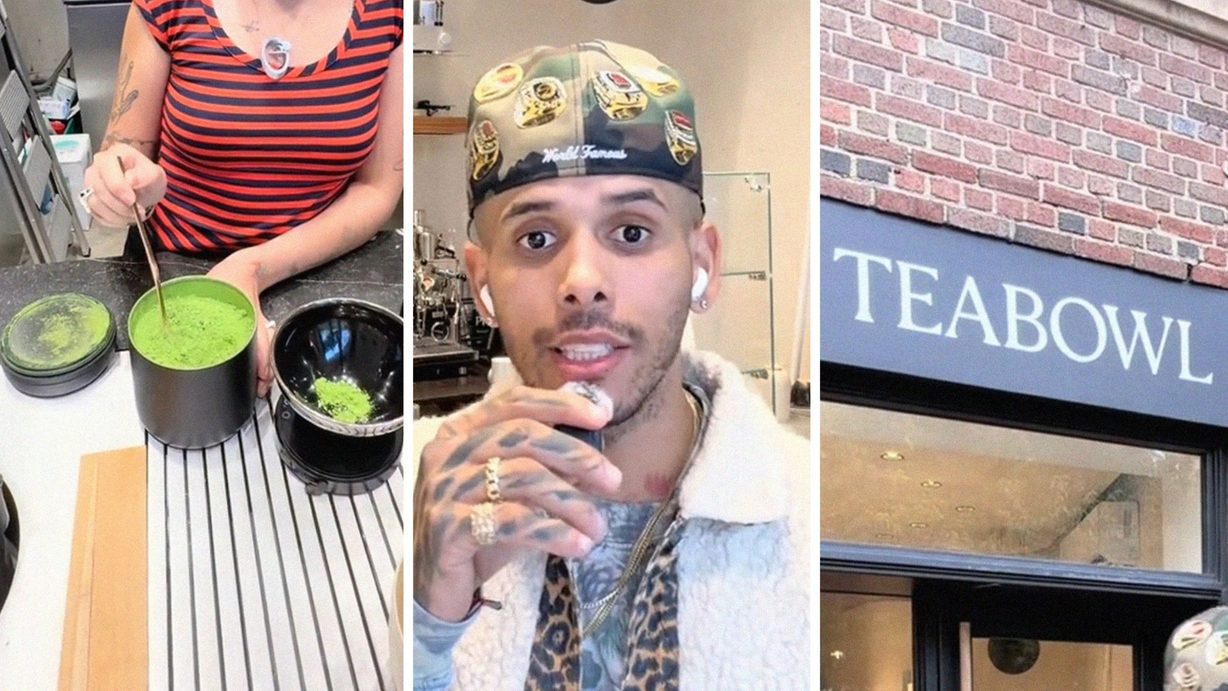

“They just charged me $94 for a matcha,” a New York man declares in a TikTok filmed outside a tea shop in Manhattan’s West Village. “This … is a scam.”
The man, who goes by @sober_facts, is standing outside Teabowl, a specialty matcha shop on Greenwich Avenue. At the beginning of the video, he displays a receipt showing a total of $94.72. His video has received more than 1.2 million views.
The price itself wasn’t a surprise. He ostensibly knew what he was getting into when he decided to try the shop’s $87 matcha, which comes to $94.72 after tax. Naturally, @sober_facts wants to know why this matcha is worth almost a C-note.
“What’s the reason why it’s so special?” he asks the employee behind the counter. Her responses are difficult to make out throughout the video, but she can be heard explaining that the shop sources it directly from a farmer in Japan in a limited harvest of just two kilograms.
He still has a hard time wrapping his head around it. “$94 matcha, bro,” @sober_facts says, before panning to the menu.
‘This is bad, bro’
When the creator receives his order, he is surprised by the portion size.
“Look at this. It’s not even a full cup,” he says.
“Nah, nah. This is bad, bro,” says @sober_facts. “I thought she was gonna add more stuff. This is it,” he says, showing the camera a half-full bowl of matcha. “It’s like a little shot of matcha.” He also questions the shape of the cup, complaining, “It don’t even stand straight.”
“Yo, I can’t believe I’m gonna pay for this,” he says, before turning the camera off to use Apple Pay. “This is unbelievable. This is unbelievable.”
“This better change my life,” he says, before taking a sip of the cup. “It hasn’t changed my life,” he says, turning back to the patient employee, who smiles and continues working.
“In Japan, they only serve it to presidents,” he says, repeating the employee’s statement. “I feel like the president today.”
Once outside, @sober_facts continues talking: “I’m telling you, these businesses are money laundering out here,” he says. “I don’t know what’s going on with these people in these businesses overcharging for stuff that don’t cost that much.”
By the end of the video, he’s calling on New York City officials to look into the shop’s pricing, saying, “Somebody gotta come investigate this business. I don’t know what they’re up to. Who … they think they are charging $94, but this ain’t it.”
He even appeals to New York City Mayor Zohran Mamdani: “Yo, Mamdani, come through, check this place out.”
What makes Teabowl’s matcha so expensive?
The matcha in question is a premium variety called Kanyo. According to a May 2026 Substack post from food writer Madeline Kyncl, Teabowl sources its teas from Japanese producer Tsujirihei Honten, “an elusive tea producer that is difficult to come across outside of Japan and primarily known by those in the trade or true connoisseur of the craft.”
Kanyo is made from a blend of two tea cultivars, Asahi (“highly aromatic” with “low bitterness”) and Ujihikari (“incredibly bright with low astringency”) grown in very small quantities and prized for combining into “the perfect cup.”
Kyncl compared purchasing the $87 tea to ordering an expensive glass of wine, explaining that “the $87 matcha latte isn’t as much of a cash grab as outraged instagram commenters want to believe” due to the time, effort, and money that had to go into a domestic Japanese tea being brought to New York City streets.
Why is the serving so small?
While @sober_facts was obviously expecting a larger serving, traditional matcha isn’t generally prepared like the large, milk-heavy lattes Americans are accustomed to. According to Serious Eats, a traditional “usucha” mixes just one teaspoon of matcha powder with two ounces of water. A more formal and thicker preparation called “koicha” uses even more powder with less water. In other words, a small serving isn’t unusual for premium matcha.
The drink’s price also comes amid rising costs for Japanese matcha, which has experienced a massive surge in global demand. In July 2025, Reuters reported that extreme heat had damaged tea harvests in Japan, contributing to supply shortages. At one Kyoto auction, the price of tencha—the tea leaf used to produce matcha—had increased 170% from the previous year.
“Definitely NOT worth it,” @sober_facts wrote in the caption of his viral video. “I’m upset … I’m still trying to understand how I just spent almost $100 on a matcha.”
@sober_facts
Subplot News reached out to Teabowl via Instagram message and to @sober_facts via TikTok message.