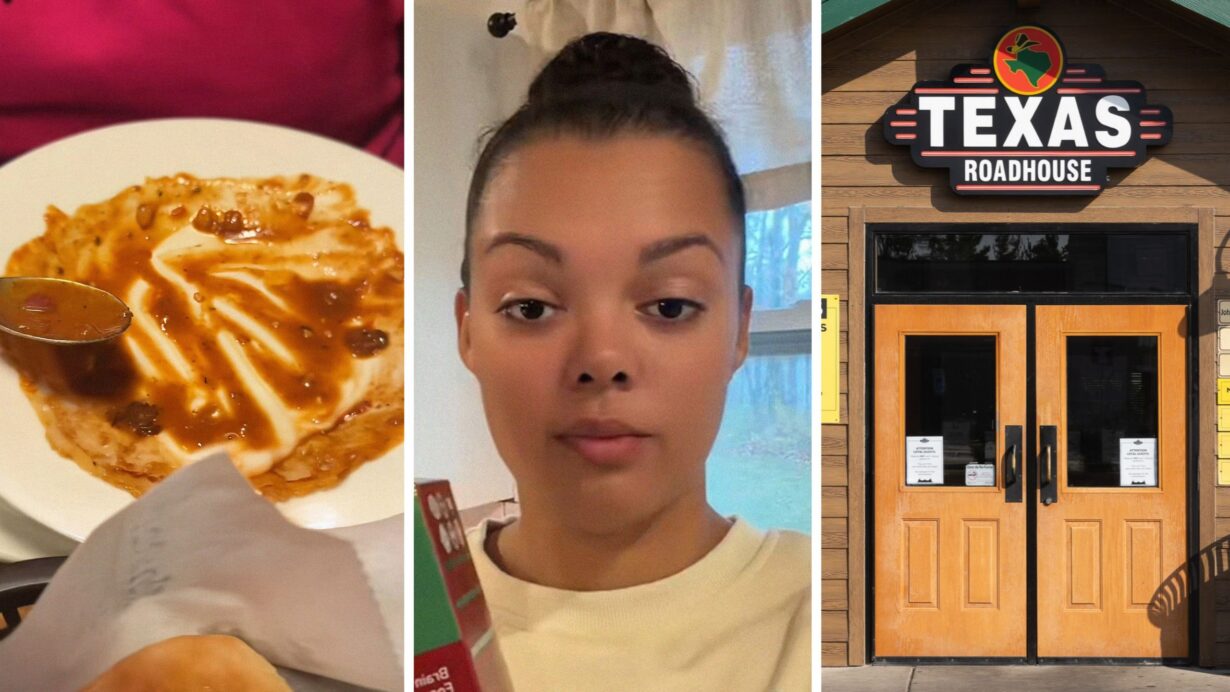

A Texas Roadhouse customer is suspicious about the serving size of her bowl of chilli. However, viewers came to the customer’s defense.
On Nov. 14, a woman (@serenekrishana222) shared her observation in a viral TikTok that amassed over 1.9 million views as of Tuesday.
“Texas roadhouse… explain,” she wrote in the video’s text overlay. “Ordered a BOWL and the amount in the BOWL was the same as what comes in a CUP.”
She provided additional context in the video’s caption.
“When my sister received her chilli, we thought we’d ask for an empty cup to see if what they served her in a bowl was more than what was served in the cup… nope, it was not!!” she said.
People explained why this may be the case
However, viewers were quick to provide more context. “The cups aren’t getting filled that much when ordered,” wrote one user.
“A bowl is 2 Oz more and costs $1 extra,” added another. “The cup has no room for cheese and onion, so it’s not the same.”
“Cups don’t get filled that much as a handful of cheese goes on top,” said a third. “Also, it’s literally only 99¢ more for the extra you get in the bowl. It’s not like it’s $5 more.”
“I work there, you get 2 scoops in a bowl rather than 1 like the cup,” added one more.
Why are customers questioning restaurant portions?
While there might be an explanation for this specific portioning, the customer’s suspicion reflects a broader frustration among restaurant customers regarding rising costs for diminishing portion sizes.
The concern has grown alongside inflation, rising menu prices, and reports of restaurant shrinkflation. Shrinkflation occurs when businesses reduce product sizes or quantities without making a corresponding price reduction.
A 2025 study by food-waste nonprofit ReFED and research firm Datassential also found that portion sizes remain a significant source of friction for diners. Nearly half of surveyed consumers said they had been surprised by a restaurant portion size in the previous month. However, customers don’t always have a clear way to determine whether a restaurant has reduced its servings. They often rely on memories of previous visits, photographs, and comparisons with other menu items.
There is evidence that restaurants are making adjustments. However, smaller portions do not always mean restaurants are trying to disguise price increases. According to an Associated Press report from March 2026, restaurants including Olive Garden, The Cheesecake Factory, and P.F. Chang’s have introduced smaller, less expensive meals. These options address customers’ budget concerns, changing appetites, and efforts to reduce food waste.
Meanwhile, the U.S. Bureau of Labor Statistics reported that restaurant food prices increased 3.5% between September 2025 and September 2026. Grocery prices increased by just 1.8% during that period, according to the USDA. Restaurants face several financial pressures behind these changes. Food prices, wages, rent, utilities, and other operating expenses have all increased.
The National Restaurant Association reported that 82% of restaurant operators experienced higher food costs in 2025 than in 2024. Labor costs also increased substantially, putting additional pressure on already tight profit margins.
@serenekrishana222
Subplot reached out to @serenekrishana222 via TikTok direct message and the TikTok comment section, and to Texas Roadhouse via email.