
Rideshare apps were supposed to be cheaper and more convenient alternatives to taxis. But anyone who’s watched their fare skyrocket in a matter of minutes knows the dream doesn’t quite measure up to reality.
One man says he found out just how inconvenient the prices can get after comparing screens with a friend.
‘Same exact place. $18’
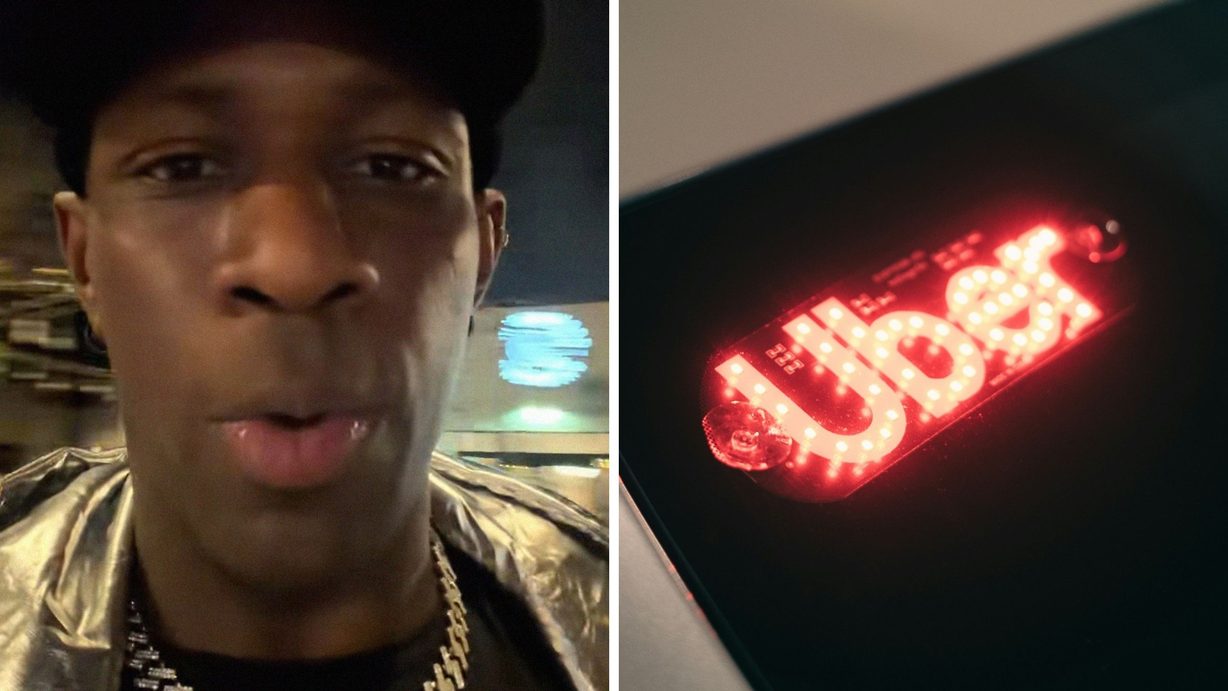
TikTok user @crownedroyal.t says his friend’s Uber was cheaper than his own, even though they were going to the same place. His video has since accumulated more than 23,000 views.
“Okay, real talk, what is going on?” the creator says. “I just requested an Uber. $32. My friend George requested one right beside me, to the same exact place. $18. What is that? It’s not funny.”
The creator says they did manage to secure a ride, but he still wanted answers.
“Why am I being charged more?” he asks. When his friend suggested that “maybe [he] had bad ratings,” he disagreed, as his rating was 4.93 out of 5 stars.
The creator then compares scores with his friend, who got the cheaper rate.
“I’m a 4.93, he’s a 4.8,” he says. “So my score is higher … but I get charged $32 and he gets charged $18 … $14 more to the same exact place … That is crazy.”
In his caption, the creator addresses Uber directly.
“Can anyone at @Uber explain this to me?” he writes. “I’ve been a customer for over 10 years with a 4.93 rating. This is the 2nd time I’ve done this and it’s charged me the higher rate. We refreshed and it was the same thing. Has this happened to anyone else? I NEED ANSWERS because that’s not right.”
‘They know you’ll pay for it’
Commenters theorized that this was intentional and algorithmic on Uber’s part, with one person naming the practice “surveillance pricing.”
“Because they know you’ll pay for it,” one viewer wrote. “They track your purchase habits and adjust your pricing accordingly. They’ve already admitted this. It sucks.”
“They have your data,” another commented. “They know how much you make and how much you’re willing to pay for services.”
“Was your battery low on your phone?” a third asked. “Apparently these ride share companies will charge you more because they think you’re more desperate for a ride if your battery is low.”
What is ‘surveillance pricing’?
On its website, Uber says its “upfront price” is based on the “estimated trip time and distance,” plus “demand patterns for that route at that time.” The price “also includes any applicable tolls, taxes, surcharges, and fees.” The site does not clarify whether prices vary specifically from rider to rider.
The term “surveillance pricing” actually has a specific meaning in regulatory terms. The Federal Trade Commission (FTC) said in a 2024 press release that surveillance pricing refers to “products and services that use personal data, including finances and browser history, to set individualized prices for the same goods or services.”
Such data could include “location, demographics, credit history, and browsing or shopping history—to categorize individuals and set a targeted price for a product or service.” Uber was not among the eight companies the FTC referenced in that press release.
Rideshare pricing differences for the same ride have drawn recent scrutiny. Fox 29 reported earlier this year that Consumer Reports volunteers requested rides along 30 virtual routes, from the same starting location to the same destination, at roughly the same time. The organization found price gaps of more than 5% on all 30, with a median difference of about 50%. Columbia Business School’s Len Sherman called the gaps “astonishing.”
“Uber and Lyft both disputed the report’s foundational supposition that the requested rides were equivalent, noting how quickly their algorithms adjust fares to market conditions, which is the so-called surge pricing the industry is widely known to use,” Fox 29 wrote. “Uber explained its system updates in real-time, while Lyft said two minutes can make a big difference in prices.”
Lastly, 13 News Now reported that “while installing Uber’s app does allow the ride share company to monitor users battery levels during use, the company doesn’t use that information to change ride prices.”
An independent investigation by the publication’s VERIFY team found that two phones at under 20% and over 90% battery got identical prices.
@crownedroyal.t
Subplot News reached out to the creator via TikTok comment, as well as Uber via email.