
Many people drive with peace of mind knowing that, if something were to go wrong with their car, it will probably be covered by their warranty.
This feeling may be misguided. It turns out, using your car’s warranty can be way more difficult than you expect, Even for problems that you expect to be covered.
Some claim that manufacturers do everything in their power to deny a claim. But what information are they using from your car to do that? And can they deny you for towing too much weight?
Could you accidentally void your Chevy’s warranty?
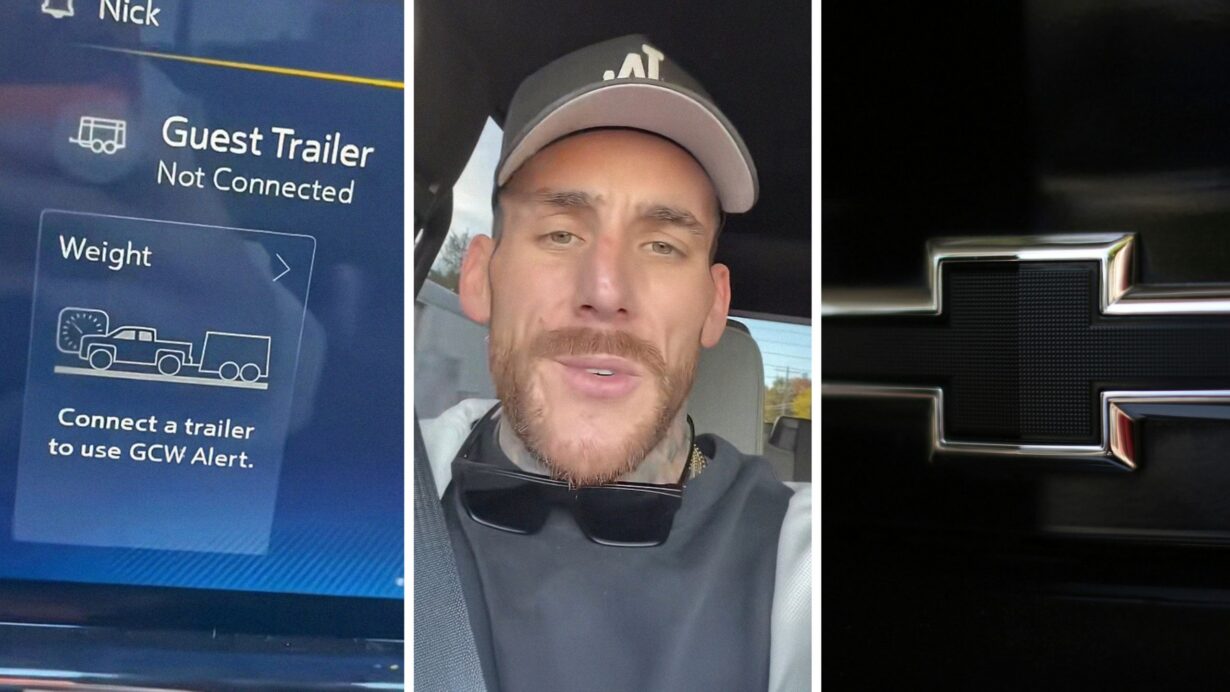
In a video with over 10,000 views, TikTok user Nick Ray (@itznickray) notices something about his Chevrolet truck he believes could ultimately cause warranty issues.
Specifically, Ray notes that the screen has a “weight” indicator that claims to measure the vehicle’s weight. While this might be helpful for someone looking to tow, Ray speculates that there could be another use.
“That’s gonna get you in trouble,” he says. “I can just see it now. Take your truck in and they’re like, ‘Hey, sir, looks like you hooked up to a trailer that weighed this much.’”
He then implies that, if one hooked up a trailer beyond the car’s weight limit, any warranty claim could be denied.
“In 2027 every truck will have [a] scale on the hitch to deny your warranty claims,” he declares in the video’s overlay text. “Watch.”
Warranty problems
Whether this is a plan for future trucks can be debated. It currently does not seem to be the case . And at least one manufacturer has explicitly denied that they plan to implement such a system.
Fears about hitch scales generating warranty denials have been around since trucks began implementing the feature. When Ford introduced it in 2021, a chassis engineer denied that Ford was planning to use the information to void warranties.
“None of this information is being used for warranty purposes or to void any sort of warranty,” Norwood told TheCarConnection.
Chevrolet’s warranty does say that damages as a result of over-towing are not covered under warranty. That said, there’s no indication in the warranty that Chevrolet would verify the tow weight using the car’s in-built scale.
Has it happened before?
Still, some claim that they have experienced this or something similar. Evidence of these claims is fairly limited.
A user on Reddit seemed to imply that an excessive onboard scale reading could void a warranty. They ended the post with “ask me how I know” — implying that it happened to them. However, they provided no additional evidence.
A Dodge Ram driver on a forum similarly claimed that their warranty was denied after the dealership determined that the car was “throwing a code that said the truck transmission had been ‘overused’ due to towing a load too heavy for the vehicle.” They also did not provide additional evidence for their claim.
Whether the scales are accurate is up for some debate. Several drivers say they’ve received warnings that their car and trailer are overweight. This is despite independent measurements saying that they are within their vehicle’s gross combined weight rating.
Can manufacturers use the information?
Some may wonder if car manufacturers would even be able to use this information to void a warranty.
The answer, it seems, is yes.
Many car manufacturers say they can use data collected from the vehicle itself in the processing of warranty claims. For example, General Motors’ privacy statement notes that the company can use information linked to hard braking, hard acceleration, hard cornering, crossing of a designated high-speed threshold, or late-night driving in order for “warranty purposes.”
Still, there does not appear to be solid evidence that any car company, Chevrolet included, is currently using information taken from the vehicle’s hitch scale in their warranty determinations. That said, they may be within their rights to do so at a later date.
We’ve reached out to Ray via Instagram direct message and TikTok comment, and Chevrolet via email.